

Beauty · 2 min read
L’Oréal Paris: driving consideration for a new serum
Buyers under 45 were giving their attention to The Ordinary and Go-To, and a heritage beauty name risked reading as the choice of previous generations.
Case study · Beauty
Four purpose-led publishers, two arguing the ethics and two reviewing the products, separating the brand from everyone making the same claim. Primer held readers past two minutes.
30 August 2024 · 3 min read
Every beauty brand says it is ethical. The Body Shop is renowned for it, but in a market crowded with the same claim, being renowned had stopped being enough to stand apart. It needed younger shoppers who care about ethics and the environment to see what its products change, for skin, for communities and for the planet, instead of taking one more claim on faith.
The campaign was called Changemaking Beauty, and it made the case in three parts.

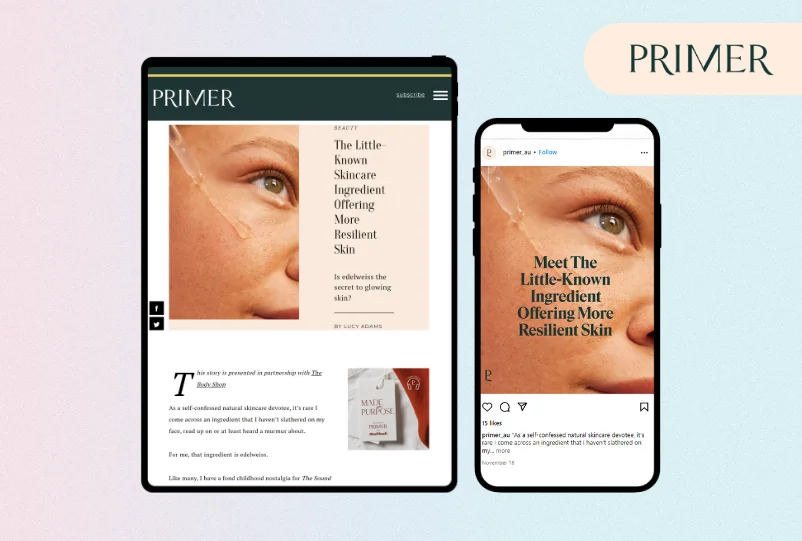
Seven articles carried it, across four publishers picked for what they stand for. Junkee has been a trusted source of news and entertainment for young Australians since 2013, and it shares The Body Shop’s commitment to social justice and progressive values, so it took the ethical lens with five ways a reader could make a lasting impact with their skincare. Primer came at the same lens from another side. It was launched to elevate women’s voices, its audience is educated and purpose led, and it runs as a social enterprise that gives 50 per cent of profits to women’s NGOs, which made it the right home for an editorial on natural beauty and the Edelweiss Daily Serum Concentrate.
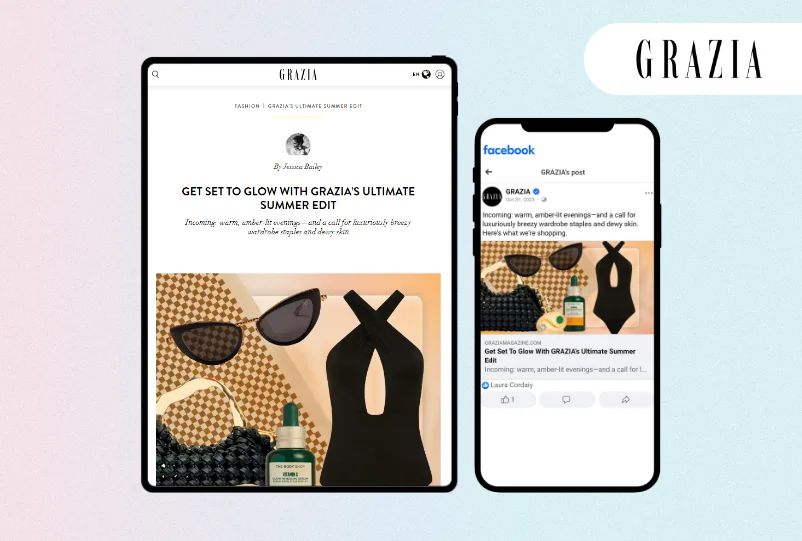
Grazia and Punkee took the products. Grazia is aspirational and premium, and it skews to women who read for fashion, beauty and culture, so its ultimate summer edit was a shoppable listing that put The Body Shop’s Vitamin C Glow Revealing Serum in front of those readers on a page they come to for that. Punkee talks to Gen Z and Millennial women in their 20s and 30s in a playful voice, so it ran a first-person review of the body butter, built on how fast the product had sold out. Avid’s amplification ran alongside the publishers’ own reach to give the seven articles scale.
The Junkee piece drew more than 12,000 article views and held readers past benchmark dwell time, and its ethical focus landed with the sustainability enthusiasts and ethical shoppers aged 18 to 24 it was written for. Dwell times sat above benchmark across the four publishers, and the seven articles came to more than 129 hours of reading.
Sarah Cook, Senior Account Director for The Body Shop at Havas, said “The partnership with Avid allowed us to connect deeply with our audience through trusted voices. This campaign successfully highlighted our changemaking initiatives and product efficacy, reinforcing The Body Shop’s position as a leader in ethical beauty.”
Saying the claim louder does not fix a category where every brand says it. What The Body Shop had instead was four publications with their own readers and their own reasons to care, two making the argument and two showing the products.
Seven articles across four publishers, counted in views, dwell time and click-throughs. That is a difference shown rather than asserted, and it is not the same thing as a brand tracking study.
Beauty · 2 min read
Buyers under 45 were giving their attention to The Ordinary and Go-To, and a heritage beauty name risked reading as the choice of previous generations.
See how your brand appears in AI answers, and where trusted publisher content can strengthen its visibility.